As I write this, I’m on the train back to Oxford from my trip in Edinburgh. I was quite fortunate, my hotel was a two-minute walk away from the National Gallery of Scotland. Here are my highlights, how I explored the gallery, and what I learned.
Process
I’ve developed a particular routine with galleries. I like to go by myself first, look around for artwork that really stands out to me, research that artwork after leaving, and then come back with more context on the work to get a second look (oftentimes with other people).
About halfway through my first tour of the gallery, I purchased the gallery’s handbook. I also took pictures of the descriptions of the paintings that I wanted to learn more about.
Back at the hotel, I read through my little guidebook and researched the paintings that stood out to me.
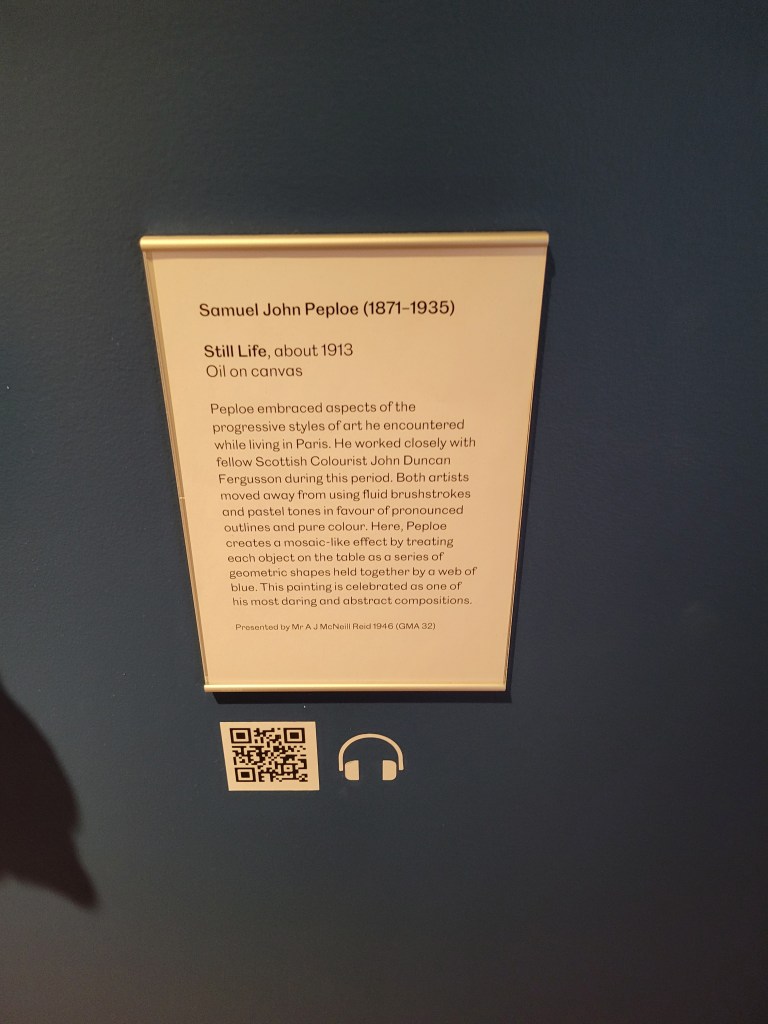

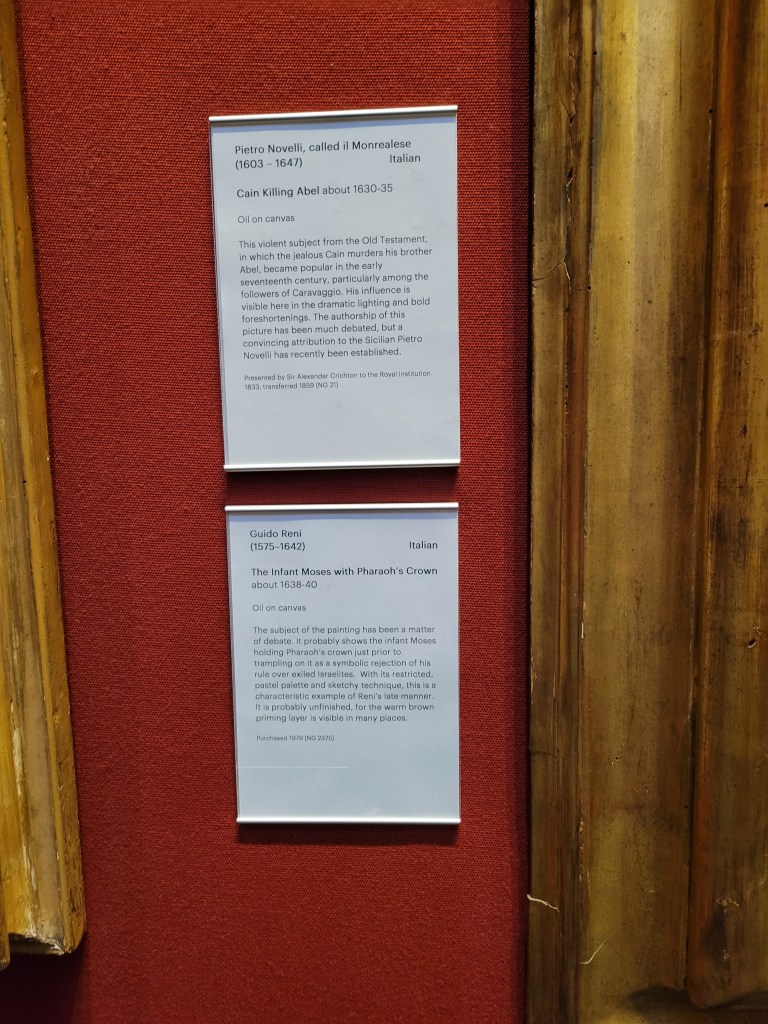
Finding a painting that I really connect with visually and then unearthing the story behind it feels like I’m on a scavenger hunt! I can learn as much (or as little) as I want about the piece, but will nevertheless deepen my relationship with it.
Highlights
There were so many precious paintings that I spent time with, but these five stuck out to me the most:
Master Baby
In the Scottish heritage exhibit, this Sir William Quiller Orchardson painting caught my eye.

Orchardson painted Master Baby as an impromptu piece. He was with his wife and son, when this moment inspired immortalization. He quickly sketched the moment down on the canvas, and had the final painting ready within two weeks. There are even small bits of the canvas fabric showing through the rushed paintbrush strokes.
Firstly, look at the mastery of the value composition in this painting… The eye naturally rests on the mother and child with the stark black and white contrast between their clothing. With the mother and the wooden decals on the seat framing the infant.
What I am drawn to most about this painting is the artist’s true love, as this must have been quite a spiritual moment to depict. To be able to so quickly paint a masterpiece of this size, and capture such a fleeting moment that speaks so loudly to a maternal relationship, could only be done by an artist who feels that same love for the subject. I wonder how many times Orchardson had drawn or painted his wife beforehand.
Monarch of the glen
Monarch of the Glen is a Scottish national treasure, and has been mass-printed on all things Scottish. Personally, I knew it from seeing its imagery while growing up in the UK, but I’m sure it is a recognizable symbol globally.

I loved sitting with this painting. I am so in love with Sir Edwin Landseer’s use of palette and value. The distant pastel mountains blending in with the mist and makes for a stunning backdrop, giving space for the monarch to be the true star of the show. My favorite detail is the use of blue to gray out the lighter parts of the antlers.
the infant Moses with pharaoh’s crown
I first noticed this painting from across the room because of the green-ish tone and very light values in the woman and baby. Thinking that maybe they were apparitions, I took a look and realized that this is an unfinished painting.
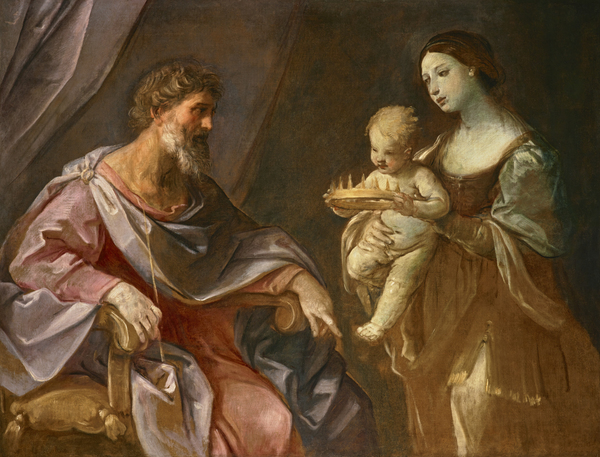
This painting depicts baby Moses taking the pharaoh’s crown, after having just been found by the Egyptian princess in the reeds by the river Nile. The pharaoh had recently ordered that all newborn Hebrew boys be executed. Moses’s mother had kept him hidden for three months, but set him afloat on the river to be found in the reeds as she couldn’t keep him hidden for much longer. Ironically, the pharaoh’s daughter finds him and adopts him.
Moses grew up to liberate the Israelites from Egypt, so Guido Reni’s painting is symbolic of how the pharaoh sealed his fate after allowing his daughter to adopt Moses. I think the unfinished figures of the princess and Moses actually add to this, as they unintentionally appear to be haunting figures for the pharaoh.
Venus rising from the sea
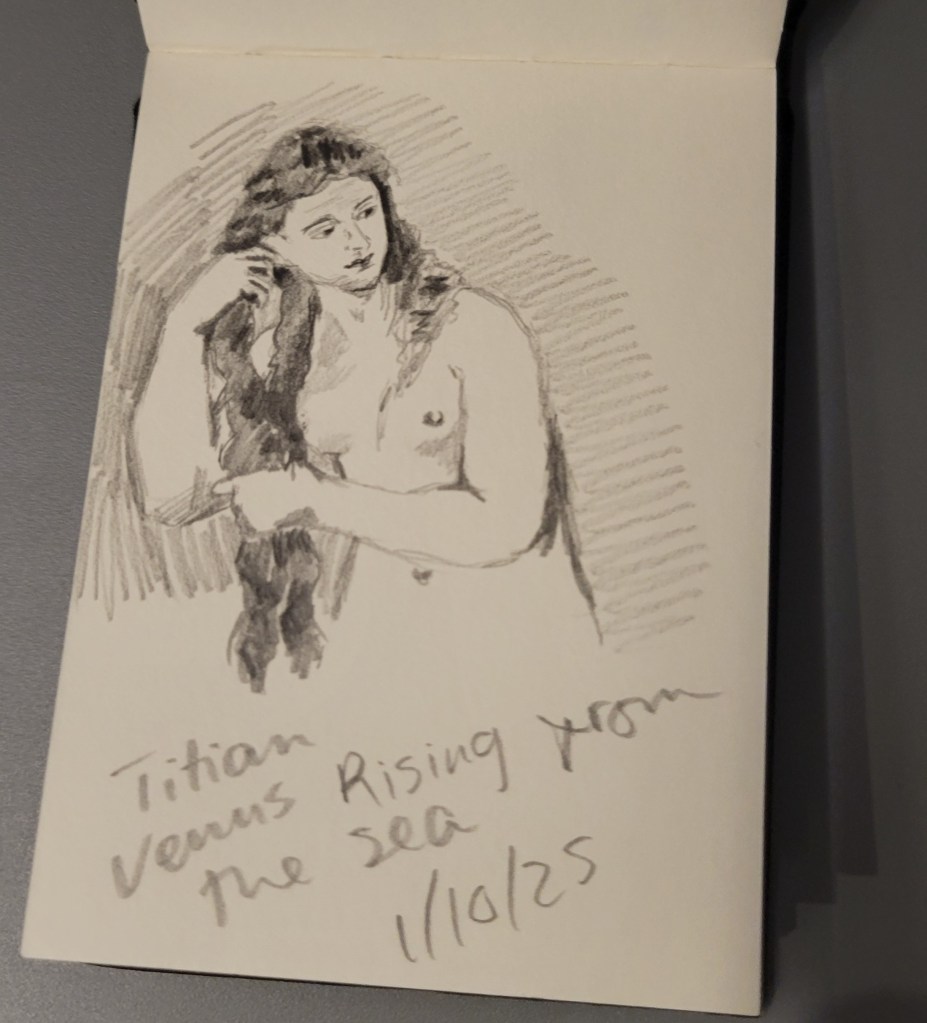
I told a few people about this painting. When I said the name, “Venus Rising From the Sea”, I was met with surprise and disbelief. Turns out, they all thought I was talking about The Birth of Venus! Unfortunately, Botticelli has no work at the National Gallery of Scotland, but Titian’s work is very proudly displayed!
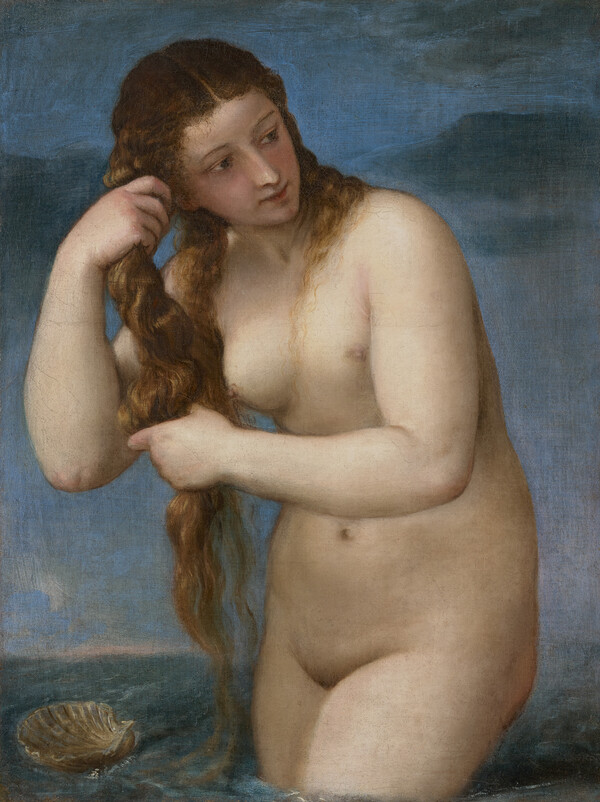
Titian’s painting depicts Venus emerging from the sea, wringing seawater from her hair. The scallop shell she floated on can also be seen behind. I spent a few minutes with this painting, and even sketched her!
Spanish boys playing at bullfighting, begun
Surrounded by finished paintings, this piece sits in the right hall on the second floor. By today’s standards, this would be a complete painting. It shows so much movement, and the most important parts of the painting are very well developed, while the rest can be filled in with the imagination.
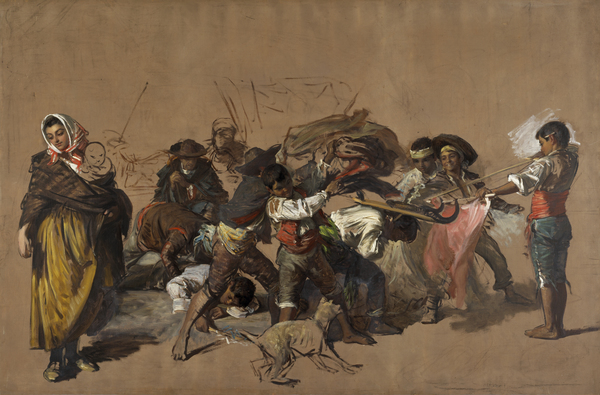
John Phillip’s painting, although never completed, is so incredibly dynamic and exciting to look at. What’s happening in the background would be an afterthought, and would probably crowd the subject if completed (in my opinion).
The boy on the far right has white around his head. Phillip’s understanding of utilizing different values to emphasize important components in a painting is quite clear. Looking at this detail, it’s clear that he would have put something light behind the boy where the white paint is, accentuating his dark hair and complexion.
In a time where art education was only accessible to those who could afford formal training, or were talented enough to be noticed by a mentor, this painting gives the viewer a unique glance at the artistic process. Phillip strategically developed the focal points first, and then worked the rest of the painting around it. I also love seeing his underpainting sketching style. It’s very loose, cartoon-like, and simple. I’ll definitely experiment with his technique to see how that style works for my own artwork.
Lessons to Take Home
- I am really looking forward to playing around with John Phillip’s technique for planning out his paintings! I hope to learn from his sketches on his unfinished painting, and perhaps allow the unfinished look to inspire a few dynamic pieces as well.
- Finding artwork that speaks to you, then looking into it afterwards to learn more context, is so much more interesting! It’s much easier to learn about something when you feel an initial spark with it- I would much prefer to research a painting after finding a breadcrumb that intrigues me.
- Speak with other people! Watch other art viewers! Observe which pieces people connect with the most- not the ones that are the most commonly photographed.
 Taryn de Meillon